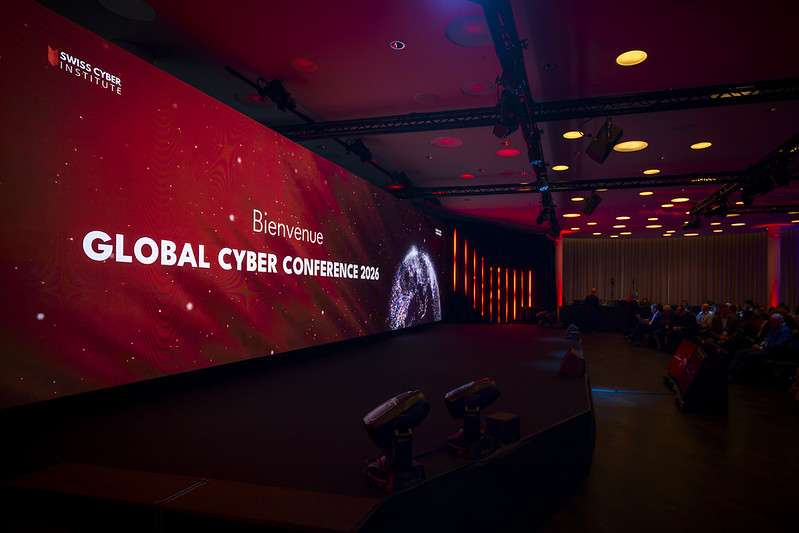
Zurich, Switzerland, September 11, 2026
This article is a feature by SwissCybersecurity.net, published on 03.09.2026, written by Coen Kaat. You can find the original article here (in German).
At the beginning of September, the fifth edition of the Global Cyber Conference took place at The Dolder Grand. Speakers, including NCSC Director Florian Schütz, discussed AI, geopolitics, the role of the CISO, and why companies should protect more than just their crown jewels.
On the first two days of September, the Swiss Cyber Institute’s Global Cyber Conference celebrated a small milestone at The Dolder Grand in Zurich: its fifth edition.
The cybersecurity industry and the world as a whole are undergoing significant change, driven in part by the rise of generative artificial intelligence.
“Most of the time, change is a good thing,” said Samir Aliyev, CEO and founder of the conference organizer, the Swiss Cyber Institute, as he opened the event. “But right now, we are experiencing exponential change — and that change can harm companies, people, and sometimes entire industries.”
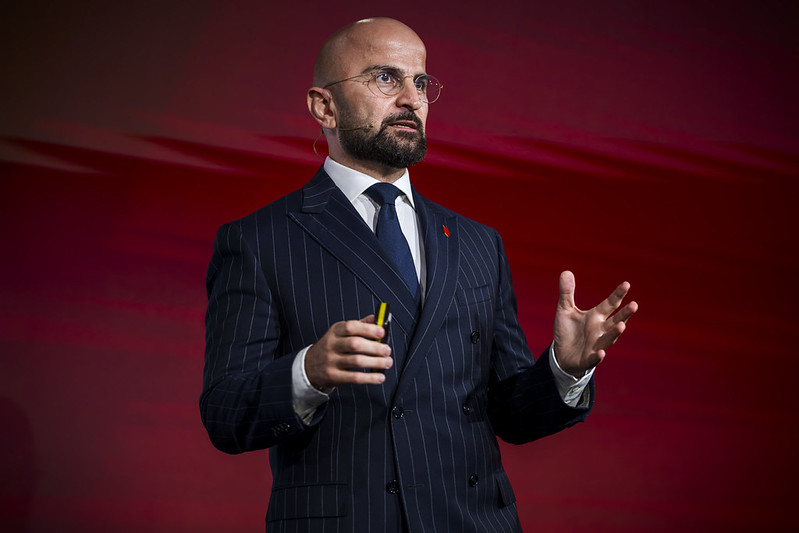
As AI eliminates some jobs and creates others, quantum computing moves from academic theory into industrial reality, and cyberattacks continue to rise, Aliyev explained.
“What does the future look like?” the host asked. “How can we really predict how our lives and careers will develop over the next three to five years? And how can we truly steer our organizations through all these changes in the AI and quantum world — from both a security and a governance perspective?”
Those were precisely the topics addressed at the conference, which brought security and IT decision-makers from 22 countries to Zurich. Moderator Nick James summed up this convergence as follows: AI is becoming both an attack vector and a defense mechanism. Quantum computing is becoming both a reality and a problem, while the geopolitical landscape is growing increasingly complex.
How Switzerland can position itself in the AI race
The first speaker to address these issues in a keynote at the Global Cyber Conference was Florian Schütz, Director of the National Cyber Security Centre. Among other things, he discussed how Switzerland could position itself in the AI race between the two superpowers, the United States and China.
The EU, he said, wants to develop highly competitive AI. He had learned this in a conversation with someone working for the EU. But where would the electricity come from?
“With today’s technology, we don’t have enough cooling water to cool data centers large enough to support a competitive AI system,” Schütz warned. “But we do have innovative cooling technologies that can reduce energy demand.”
All these factors matter when discussing cybersecurity and reducing dependencies, he argued.
The fact that people in Switzerland can talk to one another even when they disagree is an advantage as the country considers how to position itself. Another strength, Schütz said, is Switzerland’s ability to engage with different partners internationally and find solutions together.
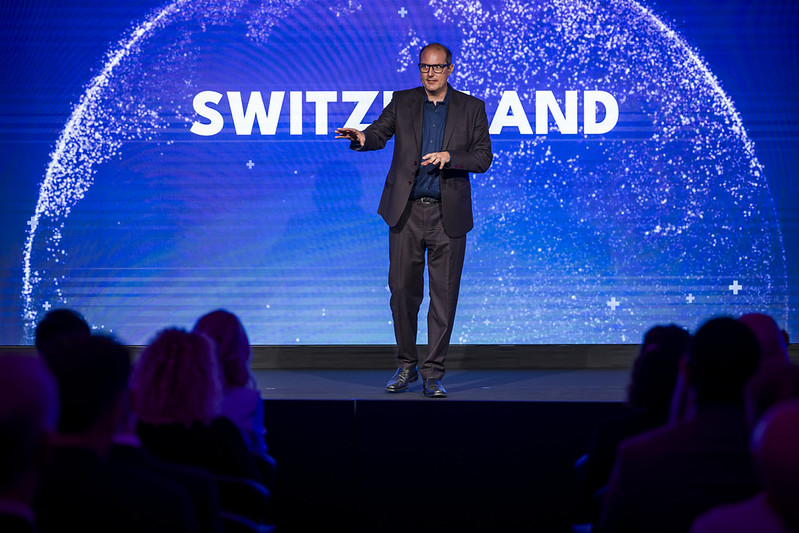
Schütz also recommended taking a broader look at the EU’s Cyber Resilience Act.
“I’m not saying I agree with everything, but the basic approach is very convincing.”
Companies should not be allowed to put defective products on the market that cause harm, he argued. “After all, you’re not allowed to sell toxic paint either.” In IT, however, the absence of exactly these kinds of restrictions is a major problem.
“On one side, you have a cheap product full of vulnerabilities, and on the other, an expensive product that may be much better,” Schütz said. How can a consumer or a power grid operator make the right choice without simply trusting marketing claims or paying substantial fees to a third-party consultancy?
“That is why I think light-touch regulation that ensures everyone can compete fairly can strengthen cybersecurity in Switzerland,” the NCSC Director said.
The EU Cyber Resilience Act entered into force on 10 December, 2024. The regulation introduces new obligations for manufacturers of “products with digital elements.” Read here what this means for Swiss companies.
The EU’s cyber early-warning system
The next speaker, Luca Tagliaretti, Executive Director of the European Cybersecurity Competence Centre (ECCC), first clarified that he was not the person Schütz had spoken to about the EU’s AI plans.
He then addressed how critical infrastructure is increasingly being used as a geopolitical lever and how the EU is responding.
Through the Cyber Solidarity Act, the EU has laid the groundwork for a network of cybersecurity hubs. The first two major hubs, one in the Mediterranean region and another in Central Europe, are currently in the funding and procurement phase. A third hub is expected to follow later in the Nordic countries.
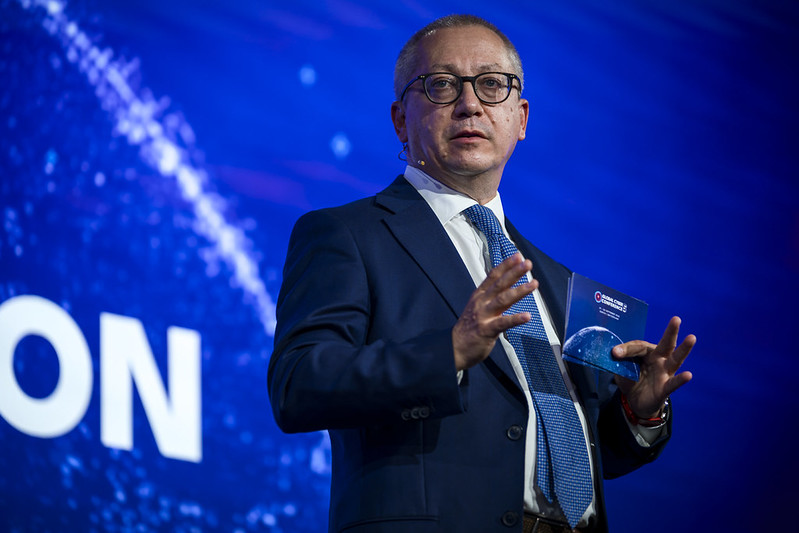
The hubs are intended to serve as an early-warning system and provide information about threats to companies and the EU.
“For the first time, we will try to pool threat intelligence and share it with the Member States,” Tagliaretti said.
This, he explained, is only the beginning. The network will grow, establish new connections, and eventually cover all Member States like a spider’s web. In the event of an attack on an EU country, ENISA, the European Union Agency for Cybersecurity, would coordinate the response.
“We have so many skills, so much capacity, so much know-how, and so many ideas. Let’s bring all of that together and work together to make Europe safer and more competitive for the future,” Tagliaretti said as he concluded his presentation.
“That is our superpower.”
The cyber world war
Ivan Kalabashkin, Deputy Head of the Cyber Department at the Security Service of Ukraine (SBU), made a related point during the panel that followed.
“It is crucial to understand that no country will be truly safe if we stop sharing information with one another, and especially cyber threat intelligence.”
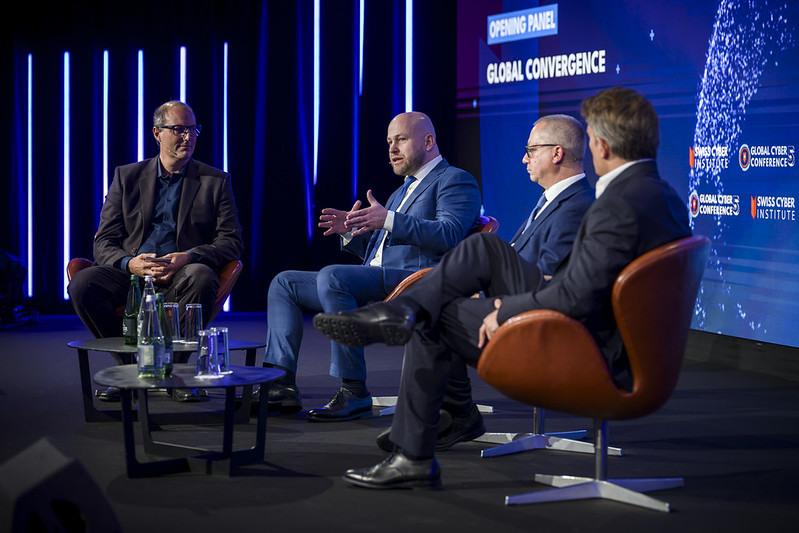
In his view, the cyber world war has already begun. Over the past several years, Ukraine has recorded more than 16,000 cyberattacks against government networks and critical infrastructure.
“There is no type of attack that we are not familiar with,” Kalabashkin said.
“The line between the civilian and defense spheres is becoming increasingly blurred,” Tagliaretti said during the panel. “This is exactly where we need to build relationships and establish trust to ensure that we can defend ourselves against threats that are currently being developed by the military and defense sector.”
The CISO’s metamorphosis and the minimum viable enterprise
The conference covered far more than cyberwar and geopolitics.
Daniel Walther, Swiss CISO of the Year 2025 and current CISO at Mobiliar, spoke about CISO 2.0. The current upheavals in IT and cybersecurity are also reshaping the CISO role.
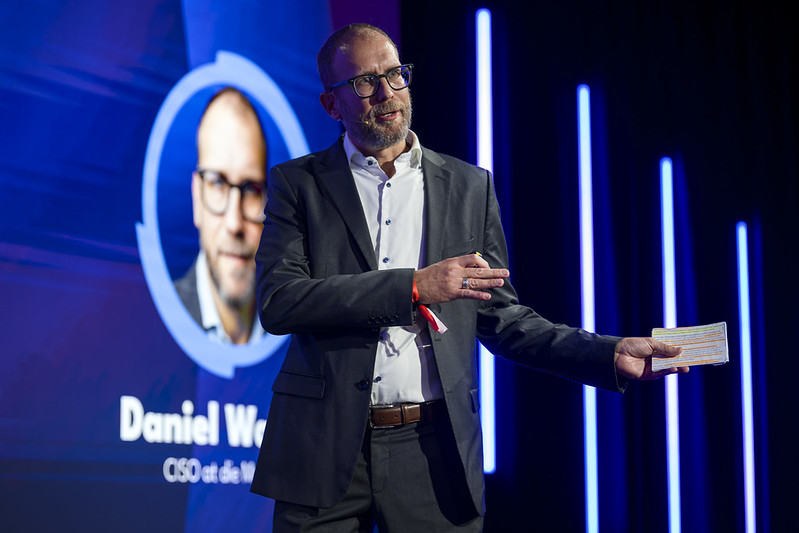
Walther compared the metamorphosis CISOs now need to undergo to that of a caterpillar becoming a butterfly.
“Old structures dissolve while new threats and attack surfaces emerge,” Walther said.
What must remain from one stage to the next, like DNA, is consistent cyber hygiene, he argued. For Walther, that includes measures such as MFA, Zero Trust, and complete visibility into assets and dependencies.
Security now needs to become agile and as autonomous as possible. Rather than creating new rules and committees for every threat, systems should identify risks, prioritize them, and respond quickly, for example by automatically containing attacks.
“If a butterfly gets caught in wind turbulence, there is no committee telling it how to respond,” Walther said.
The CISO 2.0 should be the same: fast, autonomous, and adaptable.
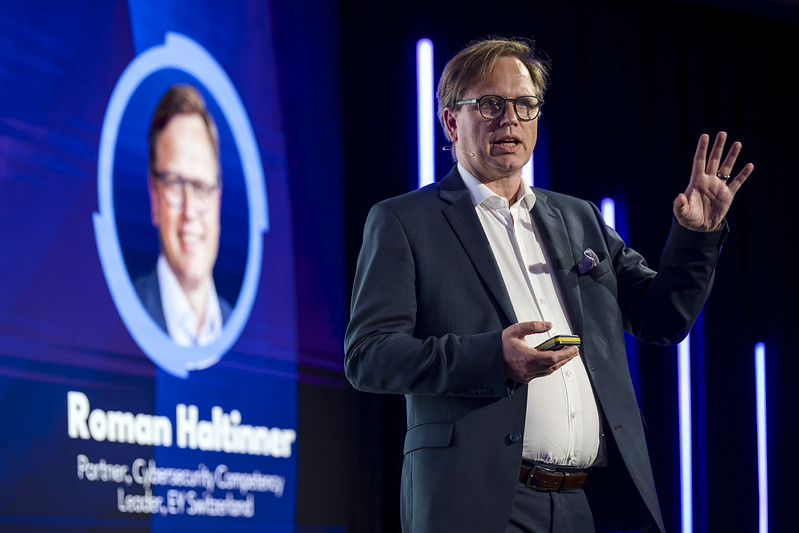
Roman Haltinner, Partner and Cybersecurity Competency Leader at EY Switzerland, focused on minimum viable enterprises (MVEs), and therefore on business continuity management.
An MVE is the smallest functioning version of a company that, in a serious incident, could continue serving customers and paying employees.
Rather than focusing only on the familiar “crown jewels,” Haltinner argued, companies should ask themselves what their own version of a minimum viable enterprise looks like.
The annual Swiss CISO Awards ceremony was once again part of the Global Cyber Conference. It took place after the first day of the conference. During the conference itself, attendees had already been given a preview of the awards ceremony with three “very special” awards.
Find out here why Florian Schütz of the NCSC, Tom Schmidt of EY, and Matthias Gsteiger of the Swiss Cyber Institute received awards, and who was crowned Swiss CISO of the Year that evening.

